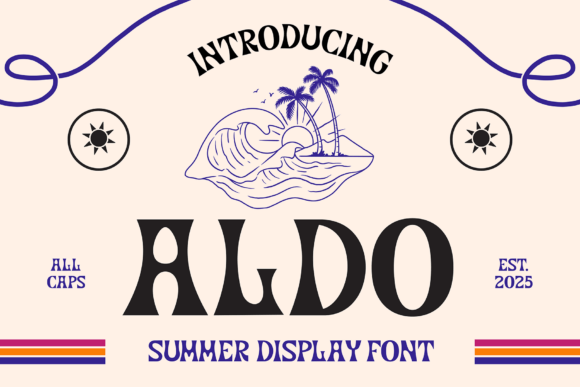
Aldo: The Vibrant Display Font for Your Summer Designs
Understanding the Visual Personality of the Aldo Typeface
In the world of design, choosing a typeface is about more than just finding letters that look good on a page. It's about finding a voice for your project. Aldo is a premium display font that speaks with a confident, sunny, and energetic personality. It’s a typeface that immediately evokes the feeling of a perfect summer day—bright, warm, and full of life. When you first encounter Aldo, you notice its clean, strong structure. It’s not a delicate script font or a rigid, corporate sans serif font. Instead, it occupies a unique space, blending the friendly appeal of a handwritten font with the legibility of a more structured design.
The character of Aldo lies in its subtle details. Look closely at the curves of the 'S' or the terminals of the 'a' and 'c'. You'll find gentle, flowing strokes that give it a human touch, preventing it from feeling sterile or overly mechanical. This quality makes it an exceptionally versatile creative font. It feels personal and approachable, which is a crucial asset for any project aiming to connect with an audience on an emotional level. The overall appeal is one of relaxed sophistication. It’s stylish without being stuffy, and fun without being frivolous. This balance is what makes Aldo a standout choice in a sea of available design assets.
Where Aldo Shines: A Practical Guide to Its Best Applications
A font like Aldo truly comes alive when applied to the right project. Its primary strength is as a display font, meaning it's designed to be used for headlines, titles, logos, and other prominent text where it can make a strong visual impact. Think of it as the star of the show, not a background player. For instance, in logo design, Aldo can establish a brand's identity as modern, approachable, and vibrant. A boutique hotel, a local surf shop, a trendy juice bar, or a summer music festival could use Aldo to create a logo that feels both professional and full of character.
Beyond logos, its applications are extensive. Consider using Aldo for:
- Branding and Marketing: It's perfect for social media graphics, email headers, and website banners where you need to grab attention quickly. The font’s energetic vibe can make marketing materials for summer sales, travel promotions, or lifestyle products feel more dynamic and appealing.
- Packaging Design: For products like artisanal foods, craft beverages, or cosmetics, Aldo can add a touch of artisanal quality. Its legibility at larger sizes makes it ideal for product names on a label, helping a product stand out on a crowded shelf.
- Editorial and Web Design: In editorial design, such as magazine covers or feature article titles, Aldo can set a contemporary and stylish tone. In web design, it works wonderfully for H1 and H2 headings, creating a strong visual hierarchy that guides the reader's eye down the page.
- Personal Projects: Don't limit Aldo to commercial use. It’s a fantastic choice for personal projects like wedding invitations (especially for a destination or outdoor event), party flyers, scrapbooking, and creating custom quotes for wall art.
Making Aldo Work for Your Brand Identity
The fonts you choose are a cornerstone of your brand identity. They communicate your brand's values and personality before a customer even reads a word. By selecting a typeface like Aldo, you are signaling that your brand is modern, approachable, and confident. Consistency is key in branding, and using Aldo across your various touchpoints—from your website to your social media to your print materials—helps build a cohesive and recognizable brand image. This consistency fosters trust and professionalism, making your business appear more established and reliable.
Aldo’s design also influences audience engagement. Its clean and vibrant letterforms are easy to read and visually pleasing, which encourages users to stop scrolling and pay attention. This is especially critical in the fast-paced environment of social media and digital advertising. When used correctly, a creative font like Aldo can significantly improve the effectiveness of your call-to-action, the readability of your headline, and the overall user experience on your website. It’s a tool that, when used thoughtfully, can directly contribute to better engagement and a stronger connection with your target audience.
A Designer's Checklist for Implementing Aldo
Before you integrate any new commercial font into your workflow, it’s wise to do a little homework. First, confirm the licensing. Aldo comes with an OTF file, but you must ensure its license covers your intended use, whether for personal projects, client work, or commercial products sold online. Reputable font foundries are clear about their licensing terms, so always check the details.
Next, consider your font pairings. A display font like Aldo needs a strong partner for body text. Because Aldo has a distinct personality, it pairs best with a more neutral and highly legible sans serif font or a classic serif font. Think of fonts like Lato, Open Sans, or Merriweather. The goal is to create contrast without conflict. The body text should be easy to read in longer paragraphs, allowing Aldo to handle the visual heavy lifting in the headlines. A common mistake is pairing a decorative display font with another decorative font, which can create a chaotic and unreadable design.
Finally, test it in context. Don't just look at the font in a design program. Mock it up on a website, a business card, or a product label. See how it looks at different sizes and on different backgrounds. Evaluate its readability on both desktop and mobile screens. Pay attention to the kerning (the spacing between individual letters) and leading (the spacing between lines of text). A great font is only as good as its implementation. By taking the time to test and refine, you can ensure that Aldo elevates your project and delivers the vibrant, professional finish it promises.