Sunkist: A Summer Script Font for Radiant Designs
Capturing the Essence of Summer in Every Stroke
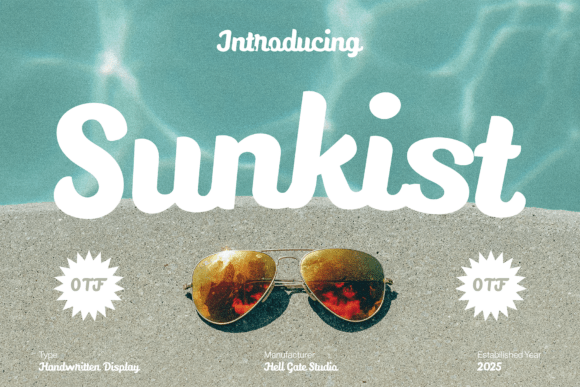
There’s a distinct feeling that comes with the best days of summer—bright, energetic, and full of life. Translating that feeling into a design project can be a challenge, but the right creative font can do the heavy lifting. Sunkist is a script font that embodies this exact vibe. It’s not just a collection of letters; it’s a design asset built with the warmth of the season in mind. As a display font, its primary job is to catch the eye and set a mood, and it accomplishes this with a playful, vivacious personality that feels both bold and approachable.
Visually, Sunkist presents a handwritten style that avoids the pitfalls of looking too casual or messy. The letterforms have a confident, flowing rhythm, suggesting a hand-lettered touch that feels authentic rather than sterile. This premium font is delivered in a single, high-quality OTF file, which ensures crisp rendering across various sizes and applications. Its strength lies in its versatility within its niche. While it’s a script font, its characters are distinct enough to maintain legibility, a crucial factor often overlooked in decorative typefaces. The overall appeal is one of effortless charm, making it an excellent tool for injecting personality and warmth into a project.
Where Sunkist Shines: Practical Applications for Creatives
Understanding where a font like Sunkist works best is key to using it effectively. Its style makes it a natural fit for projects that aim to feel personal, celebratory, or vibrant. Think beyond the obvious and consider its potential across various mediums. In packaging design, for instance, Sunkist can elevate a product label for artisanal goods, summer beverages, or beauty products, instantly communicating a fresh, handcrafted quality. For logo design, it can establish a brand identity for a boutique, a café, a lifestyle blog, or a wedding planner that wants to project a friendly and stylish image.
The digital space is another area where this creative font excels. Social media graphics need to stop the scroll, and a bold, sun-drenched typeface like Sunkist is perfect for announcements, quotes, or promotional posts. It can bring life to a website’s hero section or be used strategically for call-to-action buttons to draw attention. In editorial design, it might be used for pull quotes, chapter titles in a lifestyle magazine, or headlines in a blog post to create visual interest and break up long blocks of text. For personal projects—think custom invitations, greeting cards, or craft labels—Sunkist offers a professional polish that’s hard to achieve with standard system fonts.
The Strategic Impact on Brand and Audience
Choosing a typeface is a strategic decision that influences how an audience perceives a brand. Integrating a font like Sunkist into your brand identity toolkit can have a tangible impact. Its playful nature can make a brand feel more accessible and human, which is invaluable for building connection with a target audience. When used consistently across marketing materials, from website headers to email newsletters, it contributes to brand recognition. People begin to associate that specific visual style with your business, creating a cohesive and memorable experience.
However, this influence must be managed with an eye toward readability and visual hierarchy. A display script is not meant for body text. Its role is to act as a headline or accent font, creating a focal point that guides the viewer’s eye. Pairing Sunkist with a clean, neutral sans serif font or a classic serif font for supporting text is a fundamental practice. This contrast ensures that the design is both visually engaging and easy to consume. The script font does the heavy lifting in terms of personality, while the accompanying typeface handles the detailed information, ensuring a professional and balanced layout.
Making the Right Choice: Practical Guidance for Using Sunkist
Before integrating any commercial font into your workflow, a practical evaluation is necessary. First, consider your project’s core message. Is the tone celebratory, casual, or luxurious? Sunkist leans toward a joyful and spirited aesthetic. If your project demands a sense of serious corporate formality or minimalist starkness, it might not be the right fit. Always test the font with your actual content. Type out the specific words and phrases you’ll be using to assess their legibility and overall look. Pay close attention to the connections between letters and the clarity of any unique ligatures.
Next, explore font pairing. The effectiveness of a display font is often defined by its companion. Try pairing Sunkist with a few different options. A geometric sans serif like Montserrat or a humanist sans serif like Lato can create a pleasant, modern contrast. A traditional serif like Georgia can offer a more classic, grounded feel. This testing phase is where you assess how the fonts interact in terms of weight, size, and spacing to build a clear hierarchy.
Finally, review the font’s licensing. Since Sunkist is provided as a single OTF file, you need to verify that its license covers your intended use, whether for personal projects, client work, or commercial products like merchandise. Reputable font marketplaces are clear about these terms. Taking the time to understand these practical steps ensures that you’re not just choosing a beautiful font, but a reliable design asset