Sponge Crunch: The Font That Feels Like a Celebration
There's a particular challenge in design work that demands joy without feeling cheap. You need typography that carries personality, feels handmade, and still holds up in professional contexts. That's the space Sponge Crunch occupies — a cartoon-style display font built for projects that need to radiate warmth and energy without sacrificing quality.
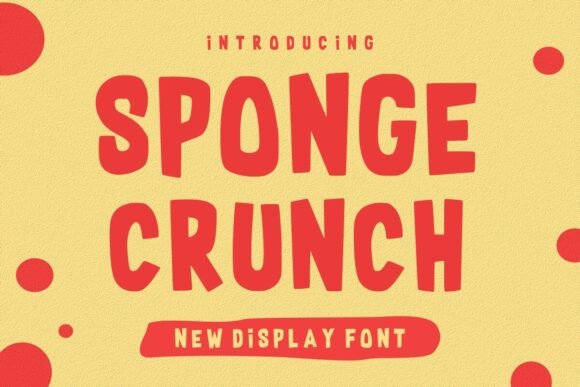
At first glance, Sponge Crunch delivers chunky, irregular letterforms that feel like they're mid-bounce. The characters have a hand-crafted quality, with subtle variations in weight and shape that prevent the monotonous uniformity you see in many novelty fonts. Each letter sits slightly off-kilter from its neighbors, creating a rhythm that mimics the natural unevenness of hand-lettering. This isn't a font trying to be perfect. It's a font trying to be alive.
Where Sponge Crunch Actually Works
Not every project suits a bold, bubbly typeface, and recognizing that boundary separates competent designers from frustrated ones. Sponge Crunch thrives in specific environments where its personality becomes an asset rather than a distraction.
Kid-focused brands represent the most obvious application. Children's book covers, toy packaging, educational app interfaces, and activity center branding all benefit from typography that signals playfulness immediately. When a parent sees Sponge Crunch on a product, they instantly understand the tone — it's approachable, safe, and fun. That instant recognition carries real commercial value in crowded retail environments.
Food and beverage packaging, particularly products targeting families or younger demographics, pairs naturally with this style. Think cereal boxes, ice cream brands, snack foods, and bakery logos. The font's visual texture almost suggests something sweet and indulgent, which makes it a surprisingly strategic choice for product designers working in that space.
Social media graphics represent another strong application. Platforms like Instagram and TikTok reward bold visual statements that stop scrolling. Sponge Crunch at large sizes on colorful backgrounds creates thumb-stopping content for event promotions, sale announcements, and brand personality posts. The font reads clearly even at thumbnail sizes on mobile screens, which matters more than most people realize when choosing a display font.
Event materials — birthday invitations, festival posters, school fundraiser flyers, community event banners — all benefit from typography that communicates celebration. Sponge Crunch carries that energy inherently, reducing the need for excessive design elements to establish mood.
Readability and Visual Hierarchy Considerations
Here's where practical experience matters. Sponge Crunch is a premium font designed for headlines, titles, and short bursts of text. It was never meant for body copy, and using it that way creates problems. Long paragraphs set in an irregular, chunky typeface become exhausting to read. The visual noise accumulates, and your audience disengages.
Instead, reserve Sponge Crunch for the moments that need maximum impact. Pair it with a clean sans serif font for supporting text. A geometric sans serif with generous spacing works particularly well — it provides visual breathing room that lets the display font's personality shine without competing. Some designers also find success pairing it with a simple serif font for editorial projects where you want to balance playfulness with a hint of tradition.
When building visual hierarchy, let size and color do the heavy lifting rather than adding effects. Sponge Crunch already carries substantial visual weight through its thick strokes and irregular shapes. Adding drop shadows, gradients, or outlines typically pushes the design into cluttered territory. Trust the font's inherent boldness.
Brand Perception and Audience Connection
Typography shapes perception faster than most design elements. Before someone reads a single word, the font has already communicated something about tone, audience, and values. Sponge Crunch tells viewers that a brand doesn't take itself too seriously, that it values approachability over authority, and that it prioritizes emotional connection.
This makes it a powerful choice for small business owners building brands around personality. A local bakery, a children's photography studio, a handmade toy shop, or a family-friendly entertainment venue all benefit from the warmth Sponge Crunch communicates. It suggests that real humans are behind the business, not corporate machinery.
For entrepreneurs and content creators, the font offers a way to differentiate visually in saturated markets. When every competitor uses the same handful of popular sans serif font options, choosing a creative font like Sponge Crunch immediately sets you apart. Recognition comes partly from distinctiveness, and this typeface delivers that reliably.
The key is consistency. Once you adopt Sponge Crunch as part of your brand identity, use it consistently across touchpoints. Your website headers, packaging, social media templates, and printed materials should all reference the same typographic voice. This repetition builds familiarity, and familiarity builds trust.
Practical Guidance for Working With This Font
Before committing to Sponge Crunch for any project, test it in context. Set your actual headlines — not placeholder text — and evaluate how the specific letter combinations in your words interact. Some letter pairs in irregular fonts create awkward spacing or unintended visual shapes. This isn't a flaw; it's the nature of hand-crafted typeface design. But you need to catch these moments before they reach a client or audience.
Review the full character set and any included styles or weights before purchasing. Quality design assets come with comprehensive glyph sets that include numbers, punctuation, and extended language support. Check whether the font includes alternates or stylistic variations that give you flexibility across different applications.
Consider your font pairing strategy early in the design process rather than as an afterthought. Open a document, set Sponge Crunch at headline size alongside several candidate body fonts, and live with the combinations for a day. What feels energetic on first impression can become grating after extended exposure. Give yourself time to evaluate honestly.
Licensing matters for commercial work. If you're a designer creating deliverables for clients, a business owner using the font on products, or a publisher incorporating it into printed materials, verify that the license covers your intended use. Most commercial font licenses distinguish between personal and commercial applications, and respecting those terms protects both you and the type designer's livelihood.
For web design applications, test rendering across browsers and devices. Display fonts with irregular shapes sometimes render differently at various sizes and resolutions. What looks crisp on a desktop monitor might lose definition on a mobile screen. Test thoroughly, and consider using SVG or image-based approaches for critical brand elements where pixel-perfect rendering matters most.
Finding the Right Fit
Not every project needs Sponge Crunch, and that's perfectly fine. If your brand communicates luxury, minimalism, or corporate professionalism, this font will fight against your message rather than support it. A sophisticated serif font or restrained modern typography option would serve you better in those contexts.
But when your project genuinely calls for warmth, energy, and a sense of celebration — when you want typography that makes people smile before they've processed the words — Sponge Crunch delivers that experience consistently. It's a specialized tool, and like all good tools, its value comes from using it in the right situation with thoughtful execution.
The best logo design and editorial design work happens when designers match typeface personality to project personality honestly. Sponge Crunch gives you a reliable option for the playful end of that spectrum, backed by solid construction and enough versatility to work across packaging design, digital interfaces, and printed materials. Use it where it fits, pair it thoughtfully, and let its inherent joy do what it does best.